
In France, an employee on sick leave must know their rights and obligations. Whether you are on a permanent contract or paid the minimum wage, it is essential to fully understand the benefits you are entitled to. The employment contract is suspended, but this does not mean you are without income. Discover how the employer and social security intervene to provide financial support. What medical certificates are necessary? What deadlines must be respected? Let’s dive into the conditions for the payment of benefits and the maintenance of salary.
What are the deadlines to inform the employer?
In the event of a sick leave, it is imperative to inform the employer within two days. This procedure includes sending a medical certificate confirming the absence. By respecting these deadlines, the employee ensures their right to compensation without administrative complications.
The employee must also ensure that the medical certificate is complete and accurate. Any error could delay the payment of benefits. The social security requires compliant documents to process claims. Careful follow-up guarantees prompt and effective compensation.
How is the payment of daily benefits carried out?

The daily benefits from social security are paid after a waiting period of three days. During this time, the employee does not receive salary. After this period, the benefits cover part of the loss of salary.
To be eligible for these benefits, the employee must have worked 600 hours in the last 12 months. This condition is essential for effective coverage. The benefits are calculated based on the previous salary, ensuring financial support during the leave.
What are the conditions to receive a supplementary benefit?
Employees with more than one year of seniority may be entitled to a supplementary benefit. This salary maintenance benefit is subject to certain conditions, notably the submission of the medical certificate within 48 hours.
The salary maintenance is also conditioned on being treated in France or within the European Economic Area. A seven-day waiting period applies to sick leaves for non-occupational illness. This period is waived in case of a work accident or occupational illness.
How are unused paid holidays managed?

In case of sick leave, unused paid holidays can be carried over. This measure prevents losing the right to rest due to absence. Carryover is possible under certain conditions, ensuring fairness for the employee.
The employee must ensure that this carryover is properly recorded by the employer. This requires a precise nominative declaration. Paid holidays are an acquired right, and their carryover must be carefully managed to avoid any loss.
What are the employer’s obligations upon return?
Upon return to work, the employer must report the employee’s return within five days. This administrative obligation is essential for the continuity of health and insurance records.
In case of occupational illness, a mandatory return medical examination must take place within eight days. This examination ensures that the employee is fit to resume their position. It is essential to guarantee the health and safety of both the employee and the company.
It is crucial to fully understand all aspects related to the rights and obligations of employees on sick leave.
- Daily benefits: Daily benefits are calculated based on the previous salary and are paid after a three-day waiting period, partially compensating for income loss during the leave.
- Medical certificate: A medical certificate must be submitted to the employer within 48 hours to justify the absence and ensure the right to compensation.
- Paid holidays: Paid holidays not taken during sick leave can be carried over, ensuring the employee does not lose their right to rest.
- Return examination: A medical return examination is mandatory after an occupational illness leave to assess the employee’s fitness to safely resume their position.
- Seniority conditions: To receive a supplementary benefit, the employee must have at least one year of seniority in the company and meet specific conditions.
What administrative steps should be followed in case of sick leave?
When an employee is on sick leave, they must follow certain administrative procedures to guarantee their rights. First, sending a medical certificate to the employer is mandatory. This document must be sent within 48 hours to avoid any complications. Then, it is crucial to verify that the certificate complies with the requirements of social security. Once these steps are completed, the employee can ensure that their benefits will be paid correctly.
Managing unused paid holidays during the leave is also an important point. Holidays can be carried over under certain conditions, ensuring the employee does not lose their right to rest. This possibility of carryover is a measure of fairness for those who, due to their illness, could not take their holidays.
Finally, it is recommended to keep a record of all communications with the employer and social security. This includes copies of certificates, letters sent, and responses received. This careful follow-up helps prevent misunderstandings and ensures smooth management of the sick leave.
What are the financial implications of a prolonged sick leave?
A prolonged sick leave can have significant financial implications for an employee. During the first days, the salary is often suspended, and the employee must rely on the daily benefits from social security. These benefits generally cover part of the salary loss, but they do not always fully compensate. To address this situation, it is possible to receive a supplementary benefit if certain conditions are met, notably regarding seniority in the company.
How to prepare for returning to work after sick leave?
Returning to work after sick leave requires careful preparation. An employee must ensure all administrative formalities are in order, especially concerning the medical return examination. This examination is essential to confirm fitness to resume the position. Additionally, it is important to communicate with the employer to organize the return and discuss any necessary adaptations to the work or hours.
What are the rights of the employee in case of occupational illness?
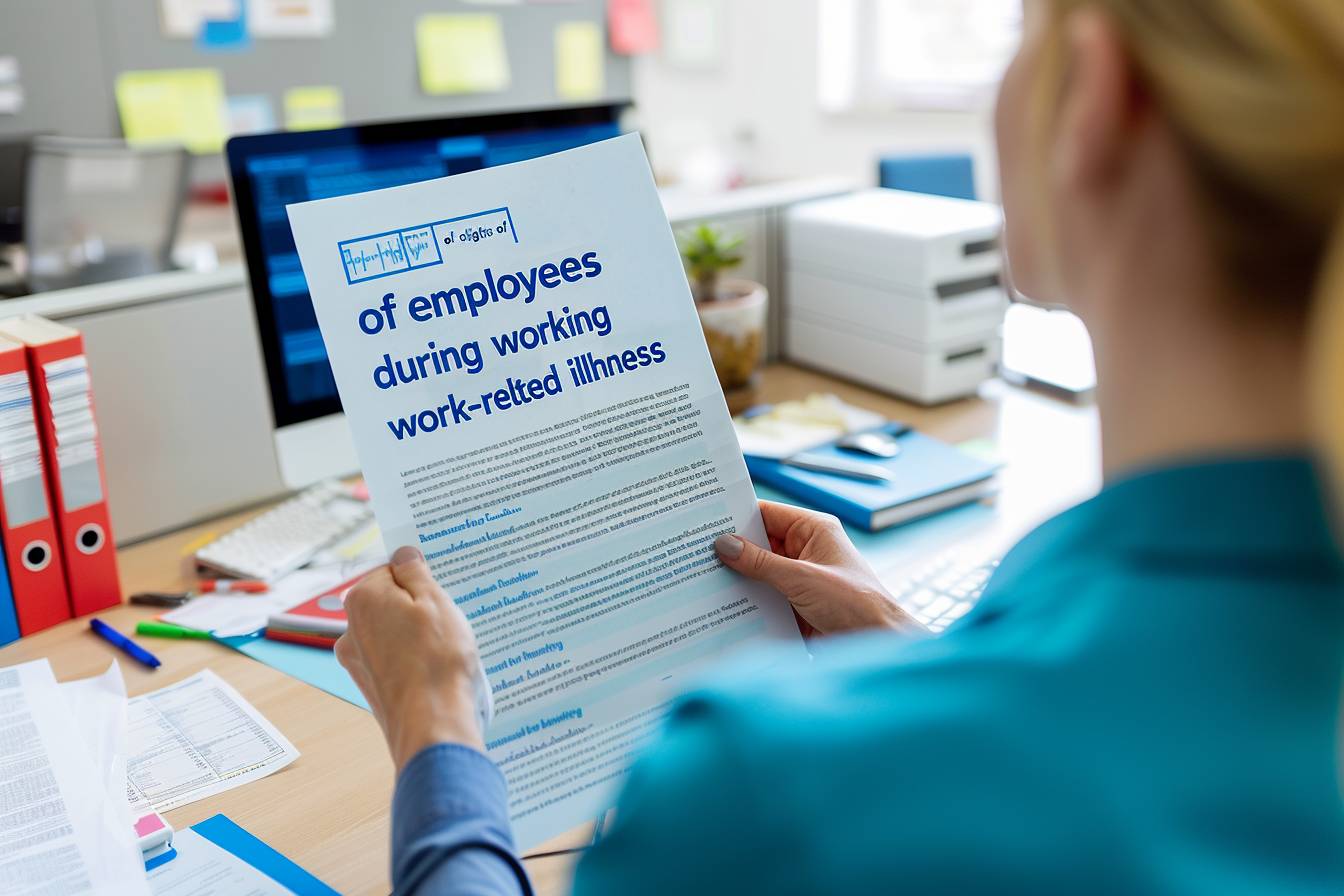
When an employee faces an occupational illness, their rights may differ from those in a standard leave. Security and salary maintenance are often better guaranteed, and the waiting period is generally waived. Moreover, a medical examination is required to assess fitness to return to work. Understanding these rights and obligations allows the employee to navigate this situation calmly and ensure all necessary procedures are completed for a safe return.
FAQ: Your Questions About Sick Leave Decoded
Can I combine several successive sick leaves without losing my rights?
Yes, it is possible to combine several successive sick leaves. However, each leave must be justified by a valid medical certificate and submitted within the prescribed deadlines. This is crucial to guarantee the continuity of benefits and salary maintenance, if applicable.
Can my employer refuse to carry over my unused paid holidays?
No, your employer cannot refuse the carryover of your unused paid holidays in case of sick leave. Carryover is an acquired right under certain conditions. Make sure the carryover is properly recorded to avoid any confusion.
Is there a maximum deadline to return to work after sick leave?
Return to work depends on the duration of the sick leave prescribed by your doctor. There is no maximum deadline imposed by law, but a medical return examination is mandatory after certain types of leave to ensure your fitness to resume your duties safely.